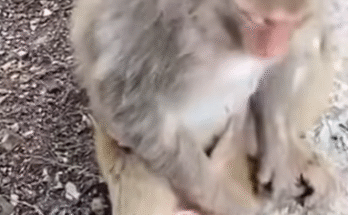
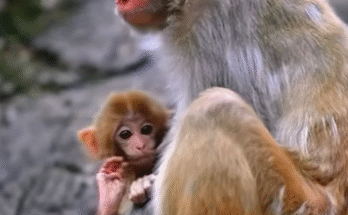
In a busy monkey troop living deep within the forest, one tiny baby monkey caused quite a commotion when his playful mischief went a little too far. Still full of energy and curiosity, he wandered away from his mother, testing the limits as young monkeys often do. But this time, the little one startled his mother so much that she reacted with sudden frustration and worry.
Mother monkeys experience strong instincts to protect their babies, and when danger feels close, their emotions can rise quickly. The mother rushed toward her baby, grabbing him firmly—not out of cruelty, but out of fear from the possibility of losing him. The baby, surprised and confused, began to shake and cling tightly as she tried to pull him closer. To humans, the moment may look harsh, but among monkeys, this kind of behavior is often a sign of intense concern rather than true aggression.
The mother’s actions were a mixture of worry, stress, and instinct. She held her baby close, inspecting him, nudging him, and making sure he was safe. The troop watched from a short distance, understanding this was a typical but tense moment in monkey parenting. Slowly, the mother calmed down, grooming the little one gently to reassure him. The baby relaxed, finding comfort in her touch after the stressful moment.
While it may look dramatic, such interactions are common in the wild. Monkey mothers must balance discipline, protection, and teaching. And although the baby scared her for a moment, her deep love and instinct to keep him safe always take over in the end.