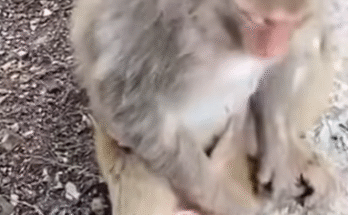
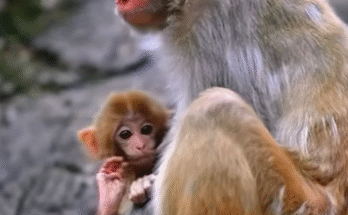
Weaning time is one of the most entertaining and emotional moments in a monkey’s life. As the little ones grow stronger, their mothers begin the process of teaching them independence — and the results can be both hilarious and heartwarming. Imagine a group of playful baby monkeys trying every trick they know just to get one more sip of milk! Some pull their mom’s tail, others cling tightly to her belly, and a few even make the funniest faces when they realize she’s serious about stopping the feeding.
These baby monkeys can be quite dramatic. When their mothers gently push them away, they might squeal loudly, roll on the ground, or chase after her with exaggerated cries. It’s almost like watching a toddler throwing a cute tantrum! The mother monkeys, however, stay patient and calm. They know it’s an important step for their babies to start eating fruits, leaves, and small insects — learning how to survive in the wild.
Amid all the funny moments, there’s also tenderness. Sometimes, after all the fuss, a mother monkey gives her baby a comforting hug or allows a short cuddle. It’s her way of saying, “You’re growing up, but I still love you.”
The scene is both comical and touching — a reminder that even in the animal world, growing up is a mix of laughter, love, and a few funny tantrums along the way.
Weaning time is one of the most entertaining and emotional moments in a monkey’s life. As the little ones grow stronger, their mothers begin the process of teaching them independence — and the results can be both hilarious and heartwarming. Imagine a group of playful baby monkeys trying every trick they know just to get one more sip of milk! Some pull their mom’s tail, others cling tightly to her belly, and a few even make the funniest faces when they realize she’s serious about stopping the feeding.
These baby monkeys can be quite dramatic. When their mothers gently push them away, they might squeal loudly, roll on the ground, or chase after her with exaggerated cries. It’s almost like watching a toddler throwing a cute tantrum! The mother monkeys, however, stay patient and calm. They know it’s an important step for their babies to start eating fruits, leaves, and small insects — learning how to survive in the wild.
Amid all the funny moments, there’s also tenderness. Sometimes, after all the fuss, a mother monkey gives her baby a comforting hug or allows a short cuddle. It’s her way of saying, “You’re growing up, but I still love you.”
The scene is both comical and touching — a reminder that even in the animal world, growing up is a mix of laughter, love, and a few funny tantrums along the way.
Weaning time is one of the most entertaining and emotional moments in a monkey’s life. As the little ones grow stronger, their mothers begin the process of teaching them independence — and the results can be both hilarious and heartwarming. Imagine a group of playful baby monkeys trying every trick they know just to get one more sip of milk! Some pull their mom’s tail, others cling tightly to her belly, and a few even make the funniest faces when they realize she’s serious about stopping the feeding.
These baby monkeys can be quite dramatic. When their mothers gently push them away, they might squeal loudly, roll on the ground, or chase after her with exaggerated cries. It’s almost like watching a toddler throwing a cute tantrum! The mother monkeys, however, stay patient and calm. They know it’s an important step for their babies to start eating fruits, leaves, and small insects — learning how to survive in the wild.
Amid all the funny moments, there’s also tenderness. Sometimes, after all the fuss, a mother monkey gives her baby a comforting hug or allows a short cuddle. It’s her way of saying, “You’re growing up, but I still love you.”
The scene is both comical and touching — a reminder that even in the animal world, growing up is a mix of laughter, love, and a few funny tantrums along the way.